Gold Coast, Spring 2026
Unwelcome Guests on My Balcony Citrus
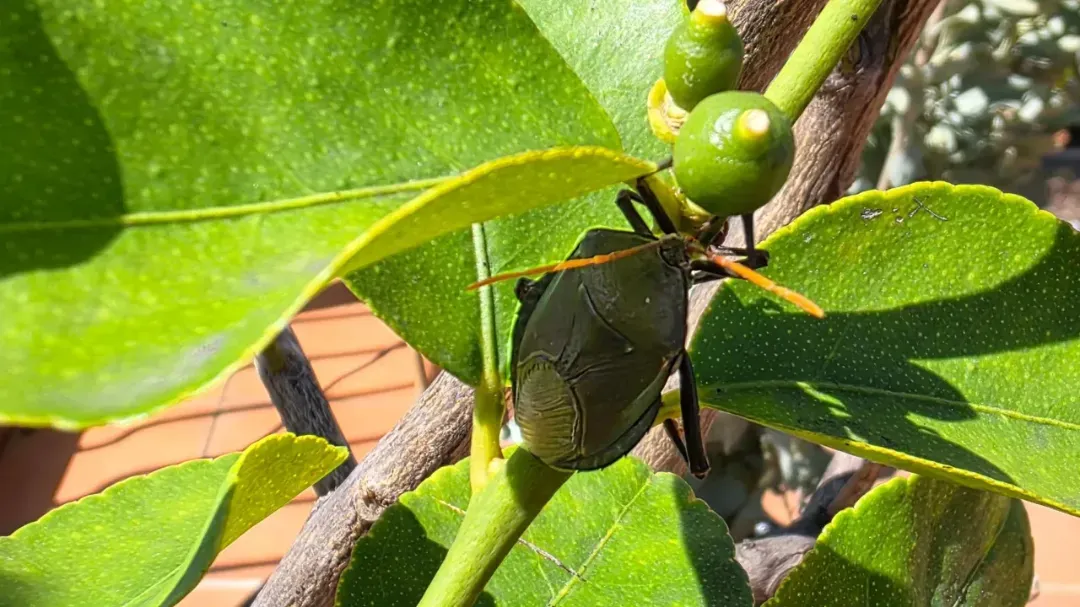
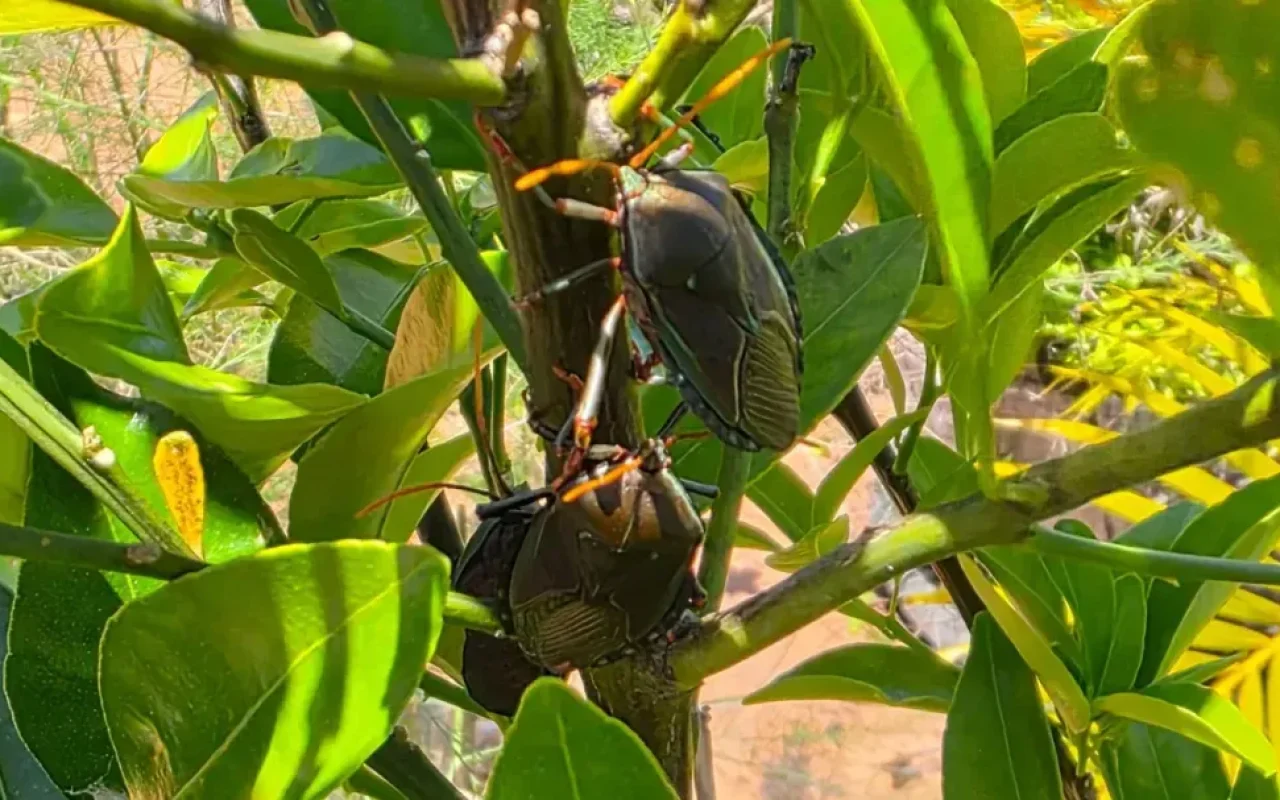
My dwarf ‘Lots A Lemons’ lemon and ‘Imperial’ mandarin were both in flower on my balcony when the Bronze Orange Bugs moved in. And they’re certainly out in force on the Gold Coast this spring. I was out walking the other day and spotted a lemon tree with what looked like 100 or more on it. Suddenly, my two pots didn’t seem quite so hard done by.
Bronze Orange Bugs (BOBs for short) change colour as they grow. The young bugs, called nymphs, can start out light green, turn beige-orange and eventually become dark bronze-black adults. The nymphs I found were only 4–5 mm long, while adults can grow to about 25 mm (2.5 cm). You can see the difference in colour in my photos.
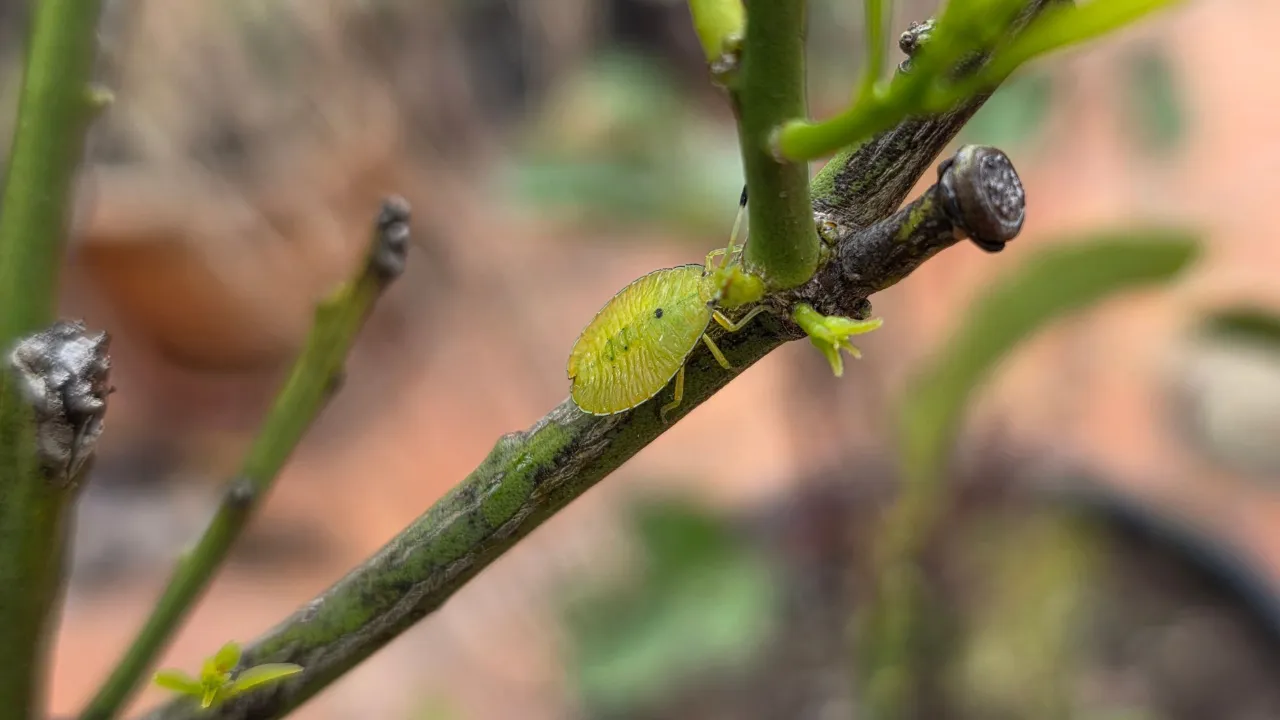
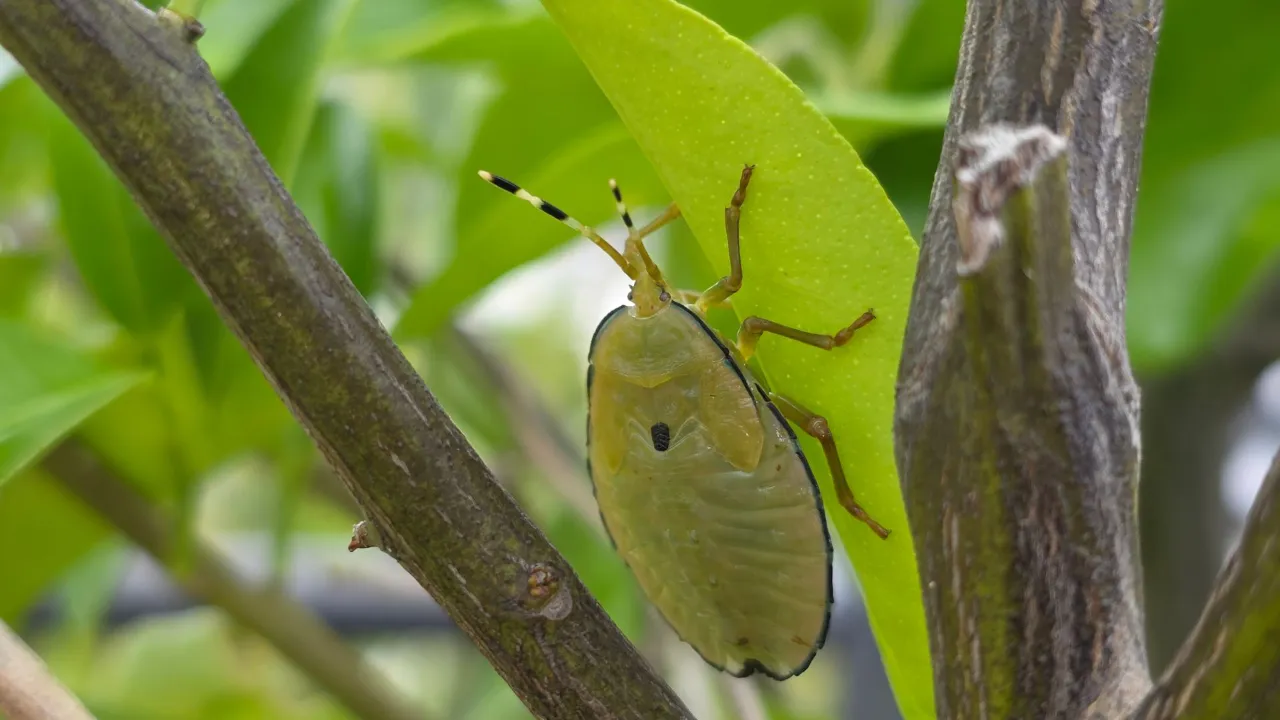
They suck sap from tender shoots and the stalks of flowers and young fruit, which can cause them to wilt and drop.

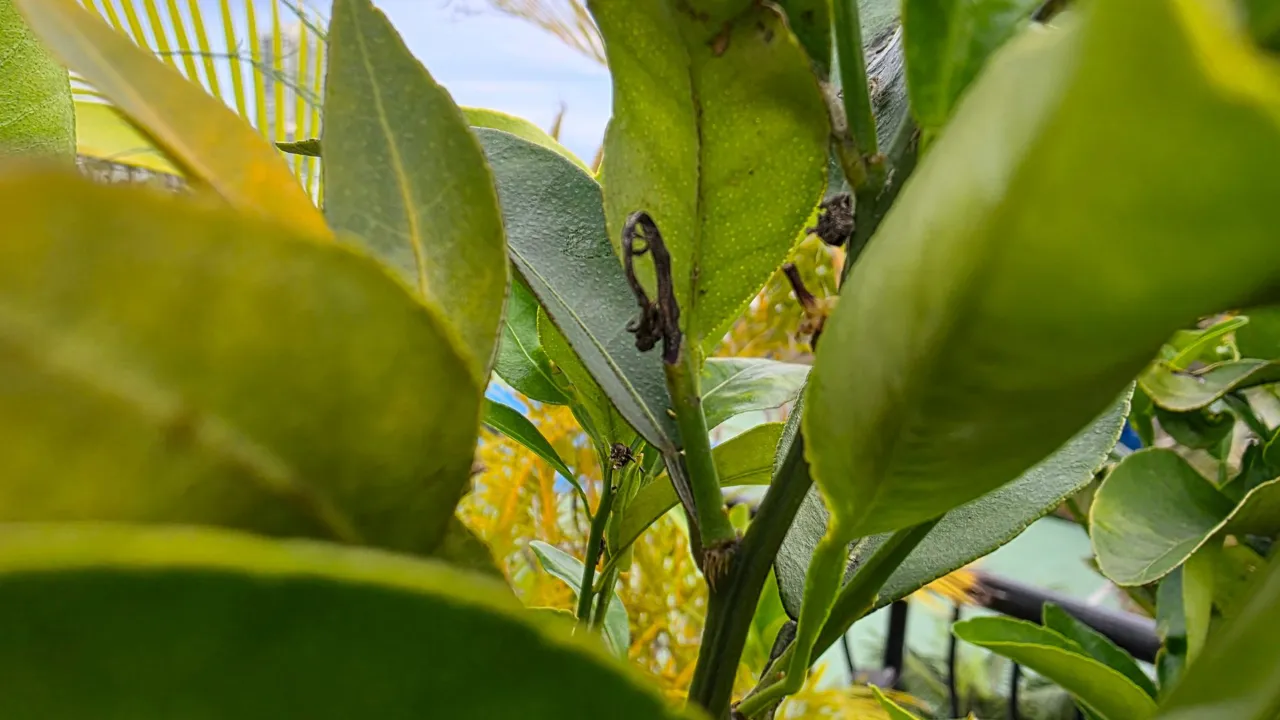
I used eco oil and pyrethrum sprays over about 10 days and got the initial infestation under control. I still check both trees every day and regularly find new arrivals. On one of those checks, I spotted some tiny light green nymphs on my kumquat. Apparently, the word has got around that my balcony serves yummy citrus.
The tiny green ones blend right in with the leaves and may have hatched from eggs laid on the tree. The larger, closer to adult size green ones, orange, and dark bronze-black ones, are much easier to spot. I’ll be turning over a few more leaves on my daily rounds now.
My Foodie Tips
- Check tender shoots, flower stalks and the undersides of leaves. The light green juveniles are easy to miss amongst the foliage.
- Wear gloves and eye protection if you’re removing the bugs. Avoid handling the bugs with bare hands if you’re removing them. When disturbed, they can squirt a foul-smelling liquid that irritates the skin and eyes.
- If you use a spray, check that the label covers your citrus and the pest, and follow the directions, including precautions around bees and flowering plants.
- Keep checking the tree even after you’ve dealt with the first lot. That’s how I’ve been spotting the newcomers and found the little ones on my kumquat tree.